

Common Wasps in Virginia Beach
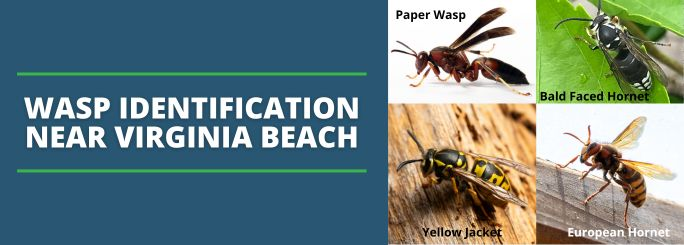
Wasps are a common problem for homeowners in Virginia Beach, Yorktown, and Williamsburg. The most common types you’ll see are paper wasps, yellowjackets, bald-faced hornets, and European hornets.
Each type looks different, builds nests in different places, and has a different level of aggression.
In this guide, we’ll show you how to:
- Identify each type of wasp
- Understand where and why they nest around your home
- Gauge which ones are more likely to sting
If you’re dealing with wasps on your property, this will help you figure out what you’re seeing and what to do next.
When Wasps Are Active in Virginia Beach, Yorktown, and Williamsburg
Wasps near Virginia Beach are most active from April through October. Queens come out of hiding and start building small nests in April and May. Colonies grow fast from June to August, and you’ll start seeing more wasps around your home. From late August to mid October nests are at their largest, and wasps are more aggressive. Wasps are usually drawn to your home for a few main reasons:
- Food (sugary drinks, trash, pet food, insects)
- Shelter (eaves, attics, wall voids, underground spaces)
- Safe nesting spots (areas protected from weather and rain)
Late summer and early fall are when most problems happen. This is when nests are fully built and wasps are more likely to sting if disturbed. If you’re seeing a steady flow of wasps in one spot, there’s usually a nest nearby.
How to Identify Common Wasps Around Your Home
The easiest way to tell what kind of wasp you’re dealing with is by looking at three things:
- Body shape and color
- Where they are flying
- What the nest looks like (and where it’s located)
Also pay attention to where they are going:
- Going in and out of the ground usually means yellowjackets
- Flying under eaves or porch ceilings often means paper wasps
- Around a large hanging nest in a tree or on the house points to bald-faced hornets
- Entering holes in siding, trees, or attics could be European hornets
If you’re seeing steady activity in one area, there is almost always a nest close by. Identifying the type of wasp helps you understand how serious the problem is and how it should be handled.
Schedule a FREE Estimate
Paper Wasps in Virginia Beach
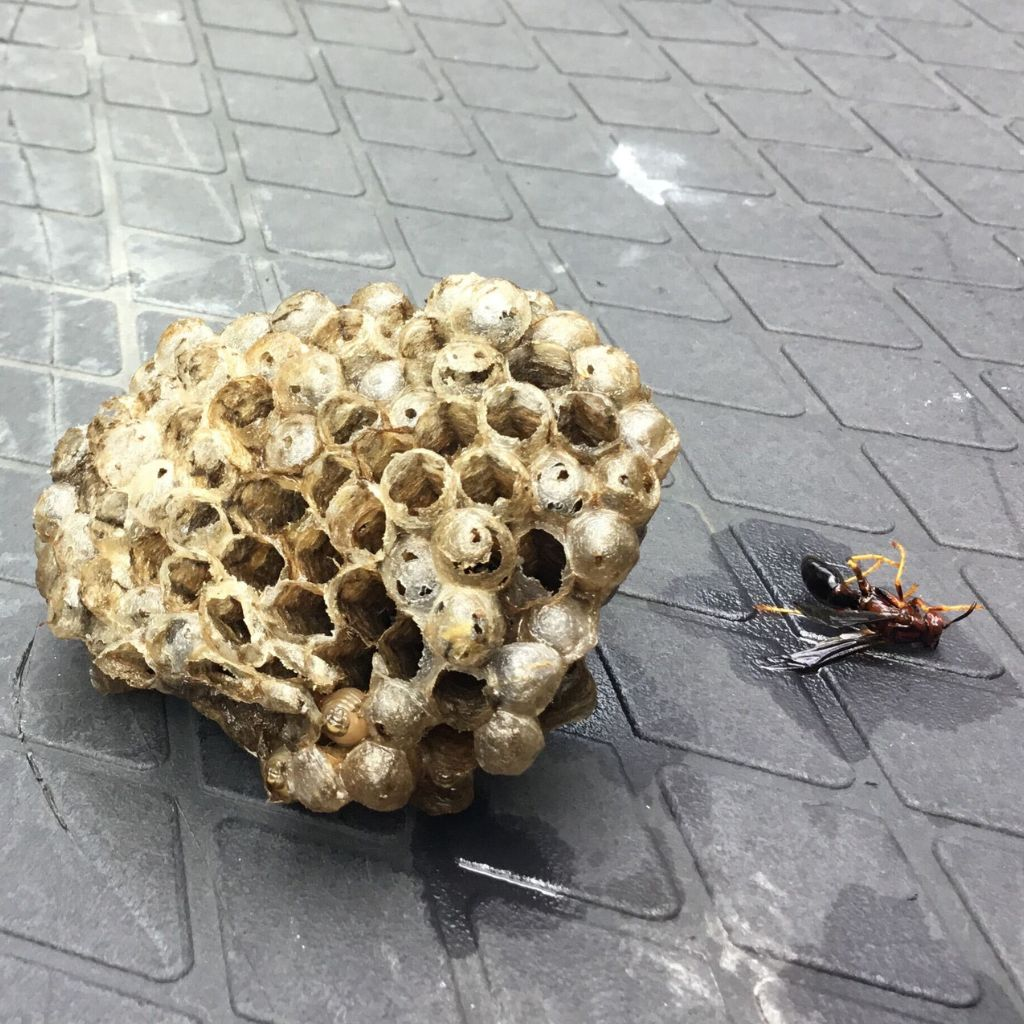
Paper wasps are one of the most common wasps homeowners see around homes in Virginia Beach, Yorktown, and Williamsburg. They tend to build nests on the outside of structures and are often noticed early in the season. They are usually less aggressive than other wasps, but they can still be a problem if they build too close to areas you use every day.
What Do Paper Wasps Look Like?
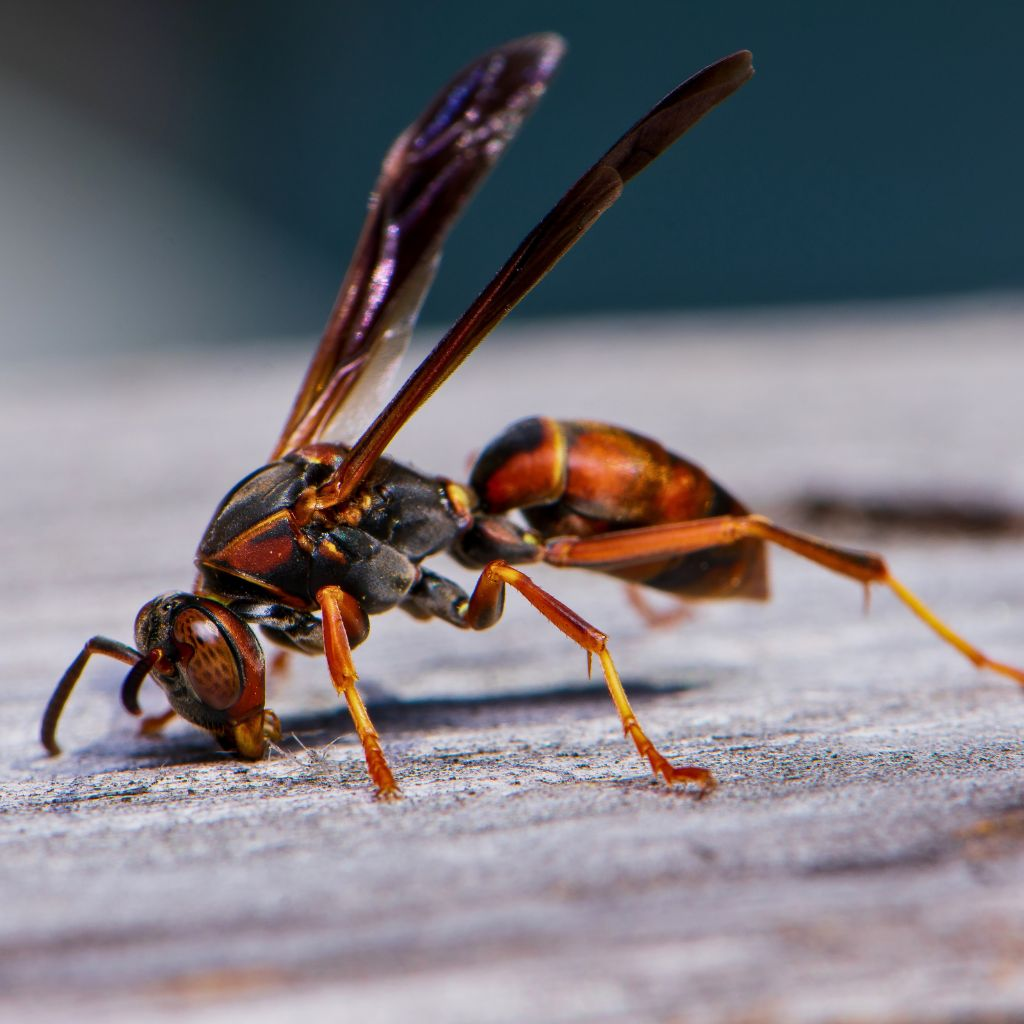
Paper wasps have long, skinny bodies and long legs that hang down when they fly. This is one of the biggest giveaways. Most other wasps keep their legs tucked in.
Their color is usually brown with some yellow markings, not bright yellow all over like yellow jackets. Sometimes they look a little dull or muted in color. If you’re seeing a wasp with long legs dangling while it slowly flies around your roofline or porch, it’s most likely a paper wasp.
What Do Paper Wasp Nests Look Like? Where Do They Build Them?
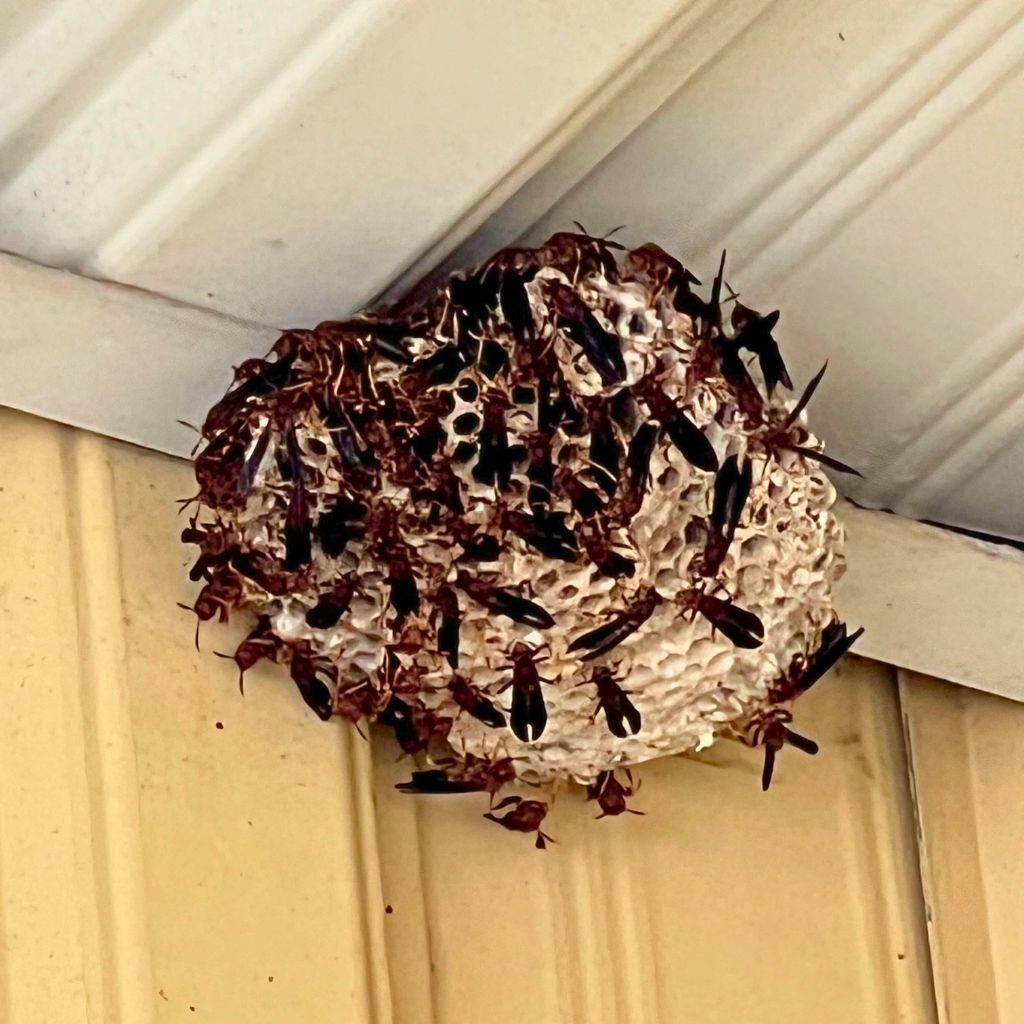
Paper wasp nests are one of the easiest to recognize. They are small, open nests that look like a gray, papery umbrella turned upside down. You can clearly see the hexagon-shaped cells, kind of like a honeycomb. There is no outer covering, so everything is exposed.
Most nests start about the size of a golf ball in the spring and can grow to the size of your hand or larger.
You’ll usually find them in sheltered, out-of-the-way spots like:
- Under roof eaves and overhangs
- On porch ceilings
- Around deck railings and door frames
- Inside garages, sheds, or outdoor furniture
They like areas that are protected from rain and wind. If you see a small, open honeycomb-style nest with a few wasps crawling on it, you’re most likely dealing with paper wasps.
Are Paper Wasps Dangerous?
Paper wasps sting to defend their nest, not to hunt or chase people. If you get too close to the nest, they’ll see you as a threat to the queen and the larvae inside. That’s what triggers a sting.
Here’s what typically happens when you get too close:
- One or two wasps will fly directly at you and circle your head or upper body
- If you stay in that area, they may land on you or sting
- Other wasps from the same nest may join in, but they do not form large swarms like yellowjackets
Paper wasps can sting multiple times because their stinger is smooth and does not get stuck.
A sting usually causes:
- Immediate sharp pain
- Redness and swelling
- Itching after the initial pain
Most stings are mild, but the risk increases if:
- The nest is near a doorway, deck, or walkway
- You disturb the nest by accident
- There are multiple wasps present
They are one of the less aggressive wasps in Virginia Beach, but if their nest is in a high traffic area, they still pose a real sting risk.
Yellowjackets in Virginia Beach
Yellowjackets are the most aggressive wasps homeowners deal with in Virginia Beach, Yorktown, and Williamsburg. They are responsible for most wasp stings in this area.
Unlike paper wasps, yellowjackets are very defensive and will attack quickly if disturbed. They’re also more likely to be found in hidden areas, which makes them more dangerous around the home.
What Do Yellowjackets Look Like?
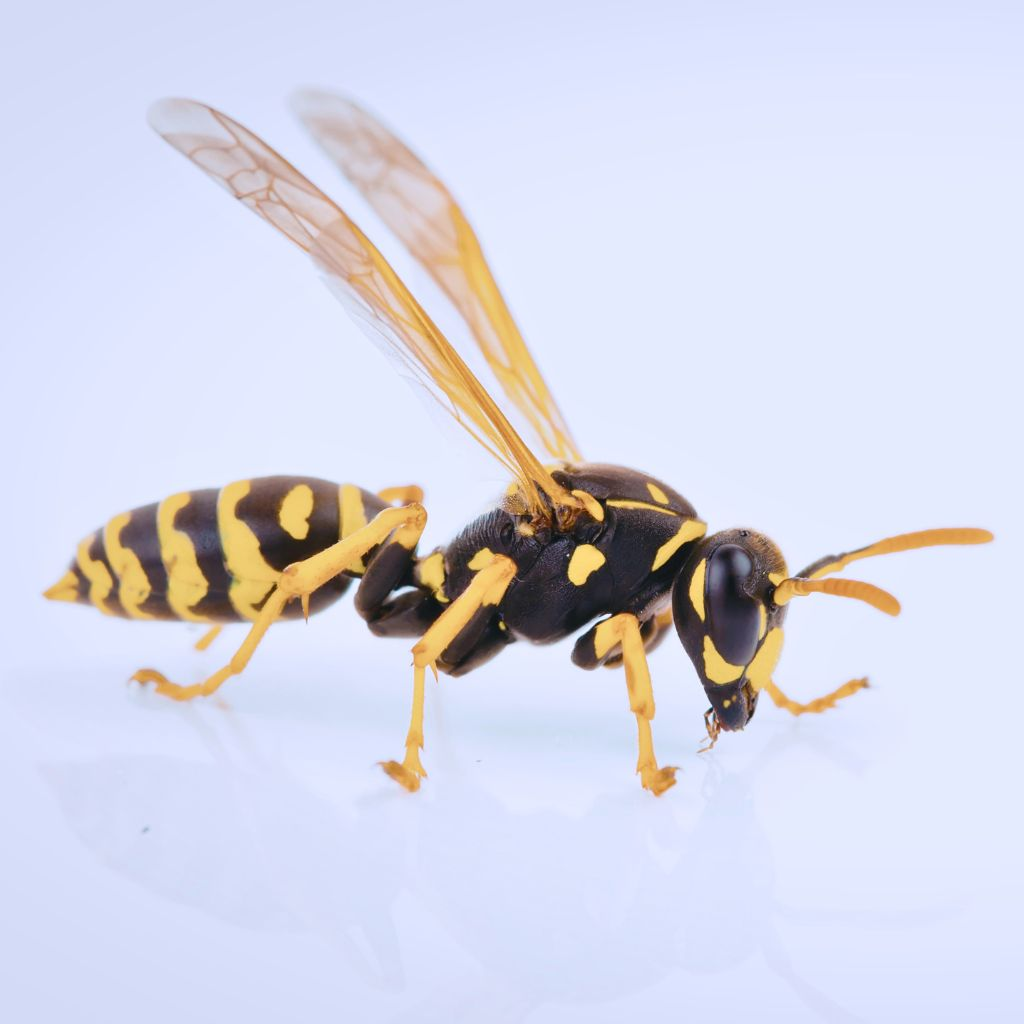
Yellowjackets have bright yellow and black stripes and look more bold in color than other wasps. Their bodies are short, thick, and compact, not long and skinny like paper wasps. Their movement is another way to identify them. Yellowjackets fly fast and direct, often darting back and forth instead of hovering. They don’t move slowly like paper wasps.
Their behavior is usually what gives them away:
- They’re often seen flying in and out of the same spot, especially near the ground or along your home
- They’re very interested in food, trash, and drinks
- If you get too close, they may come straight toward you quickly
If the wasps you’re seeing are bright yellow, moving fast, and acting defensive around one area, you’re most likely dealing with yellowjackets.
Where Do Yellowjackets Nest?
Yellowjackets can build nests both above ground and below ground, which makes them harder to identify than other wasps.
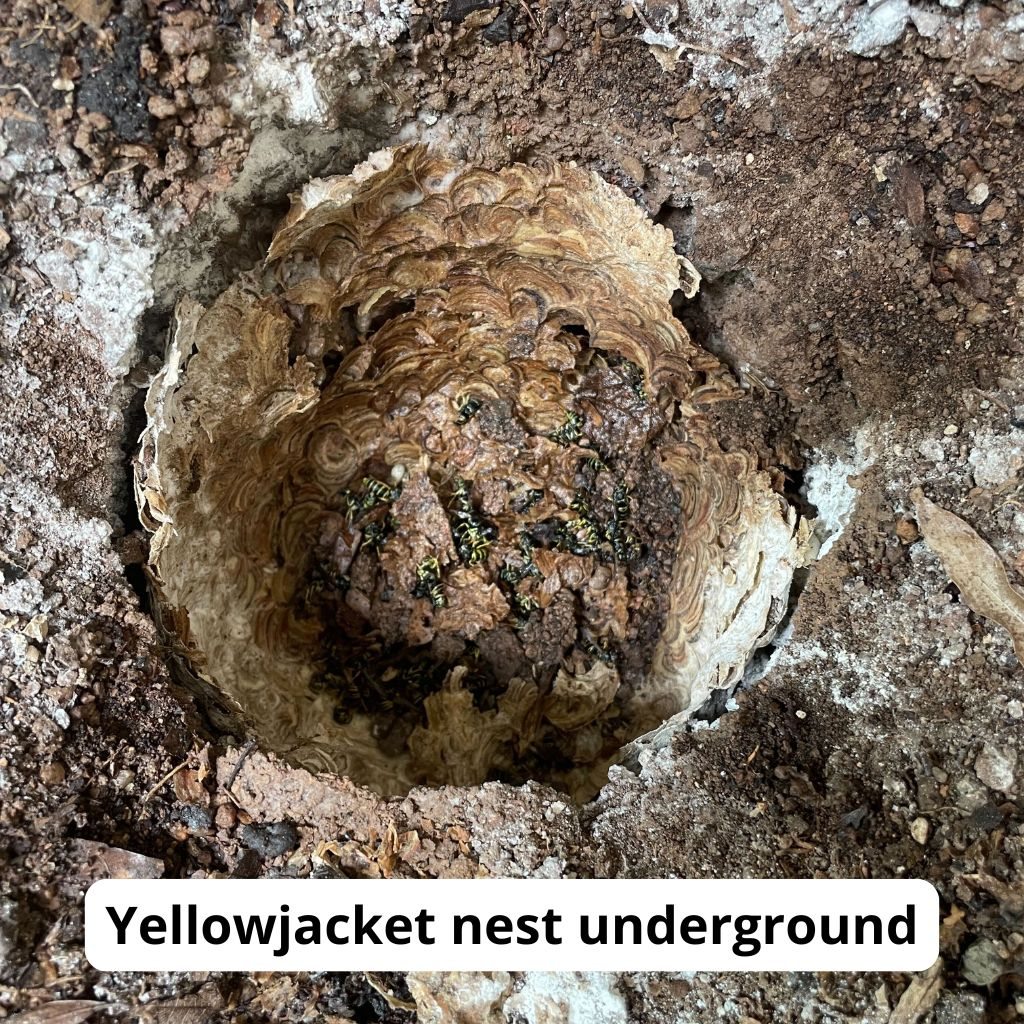
They often build underground nests in lawns, landscaping, or along foundations. These usually have a small hole, and you’ll see wasps going in and out all day.
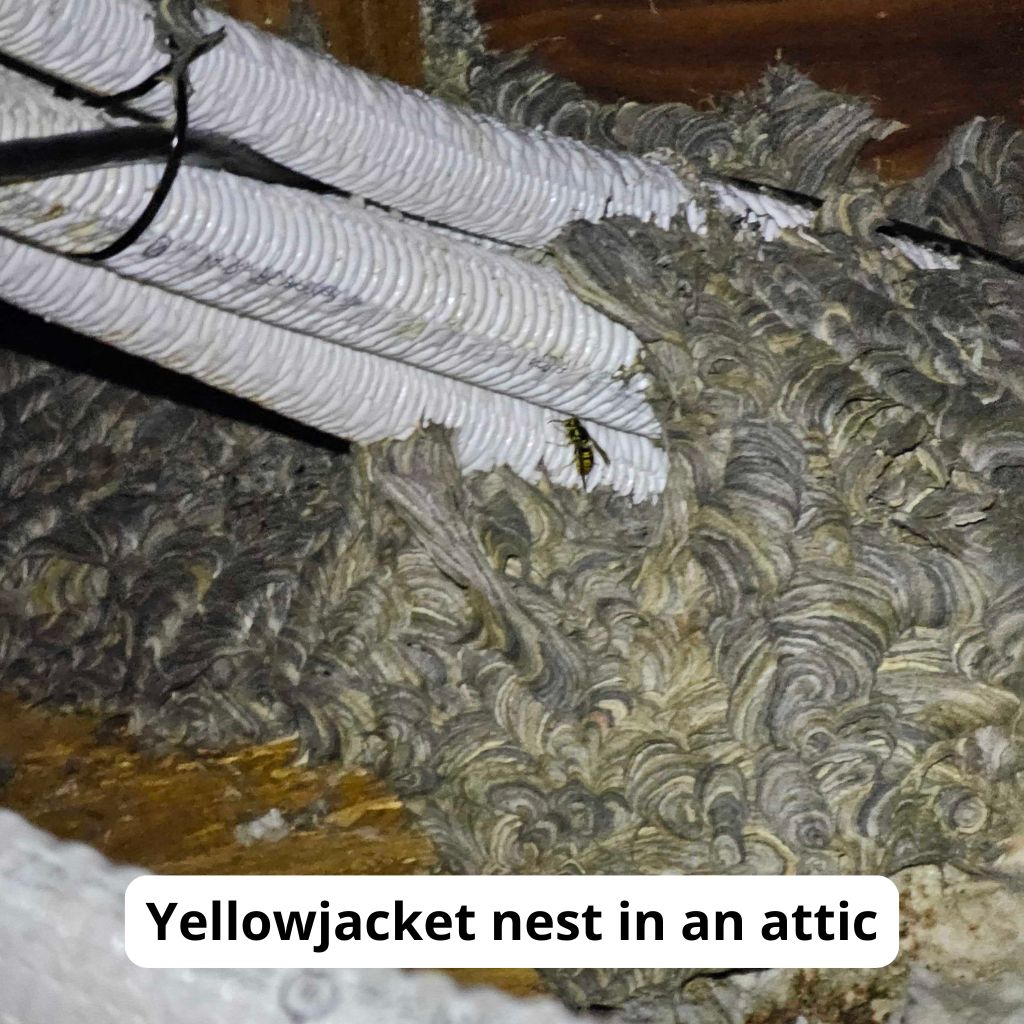
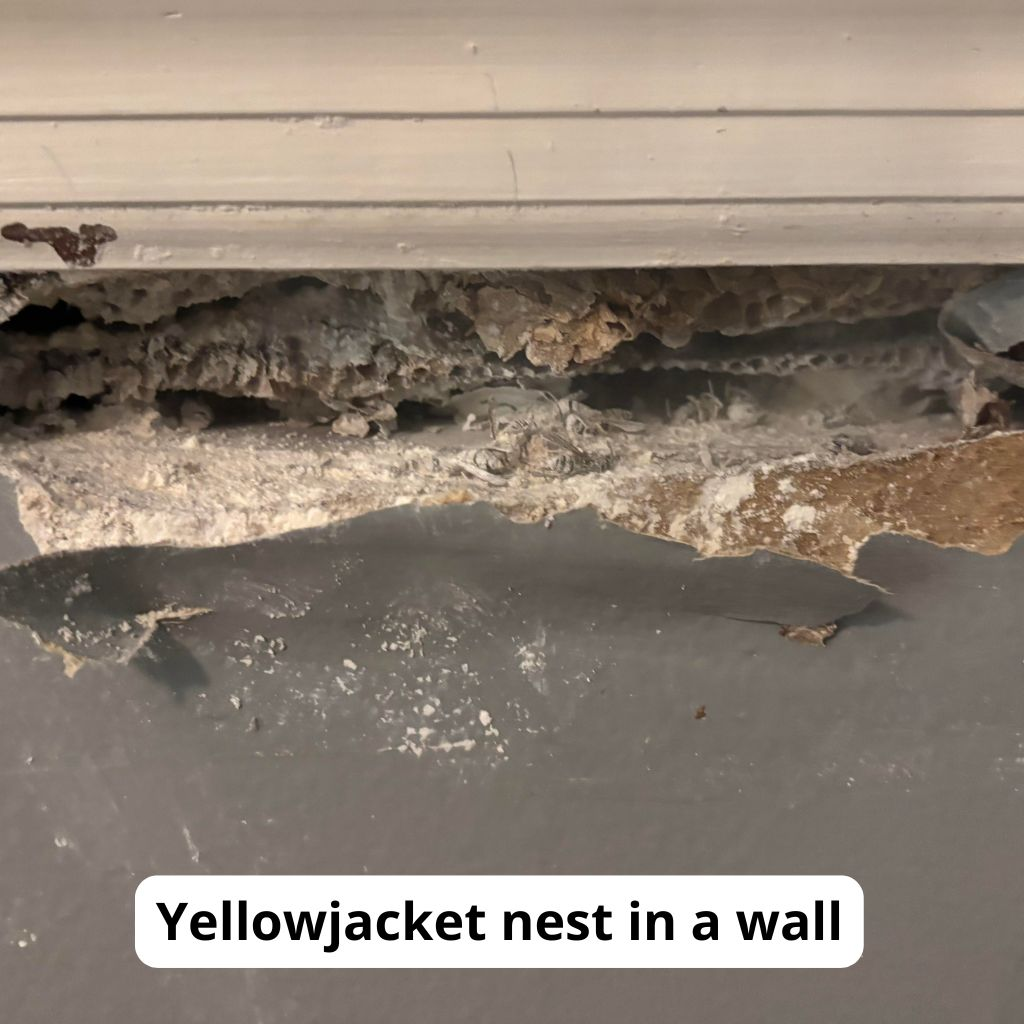
They also build nests inside structures like wall voids, crawlspaces, and attics. In these cases, you may notice wasps entering through a gap in siding, soffits, or vents.
Yellowjackets can also build aerial nests in trees, bushes, or attached to parts of the home. These are more visible but still fully enclosed.
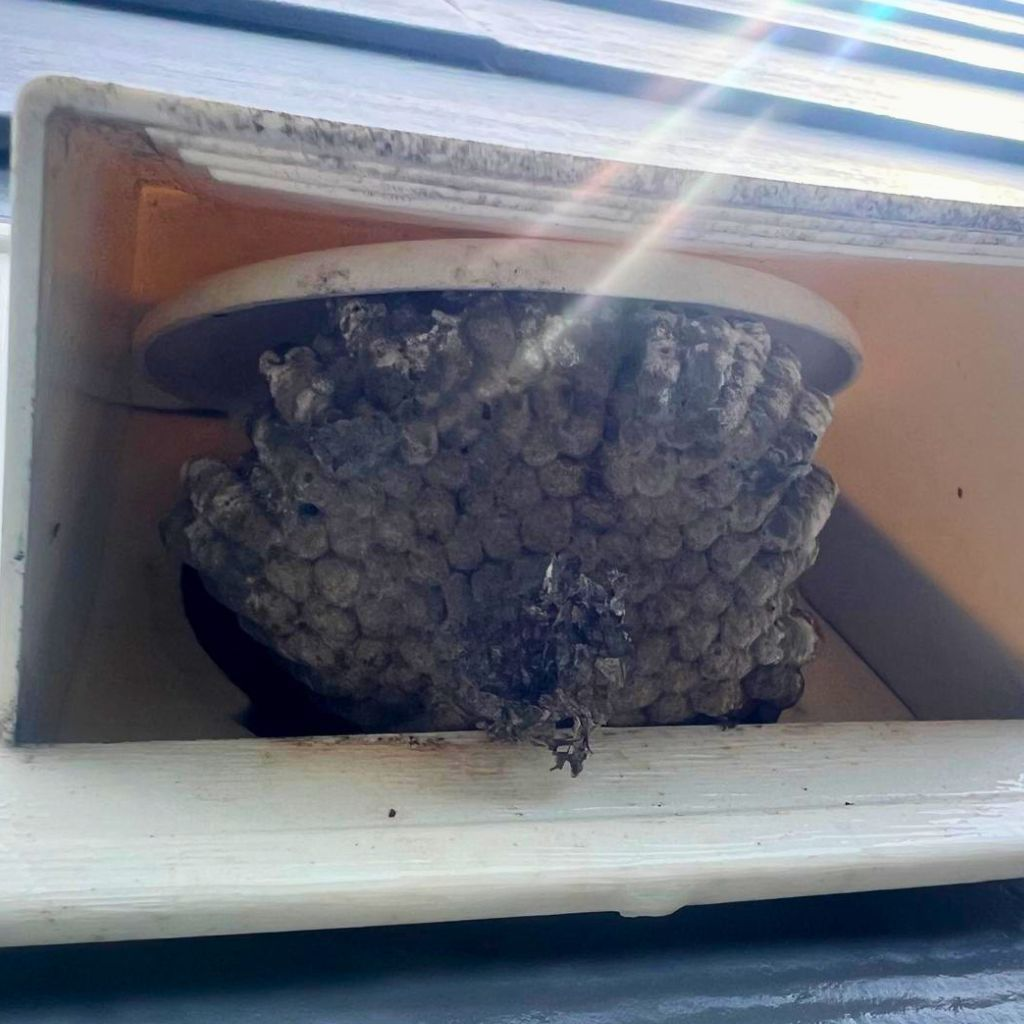
Their nests are made of a gray, paper-like material and are completely closed off on the outside. Inside, there are layered sections where the colony grows. Most of the time, you won’t see the nest itself. You’ll notice steady activity going in and out of one spot, which is a strong sign of a yellowjacket nest nearby.
Are Yellowjackets Aggressive?
Yes. Yellowjackets are the most aggressive wasps in the Virginia Beach area. They’re very protective of their nest and will react quickly if you get too close, even if you don’t realize the nest is there. Unlike paper wasps, yellowjackets are much more likely to swarm. If one stings, it can release a scent that signals other yellowjackets to join in. Their stings are painful and can happen fast, especially with underground nests where people accidentally step too close.
Common symptoms of a Yellowjacket sting include:
- Sharp, burning pain
- Swelling and redness
- Itching after the initial sting
Because of their aggression and tendency to swarm, yellowjacket nests are one of the most dangerous to deal with on your own.
Bald-Faced Hornets in Virginia Beach
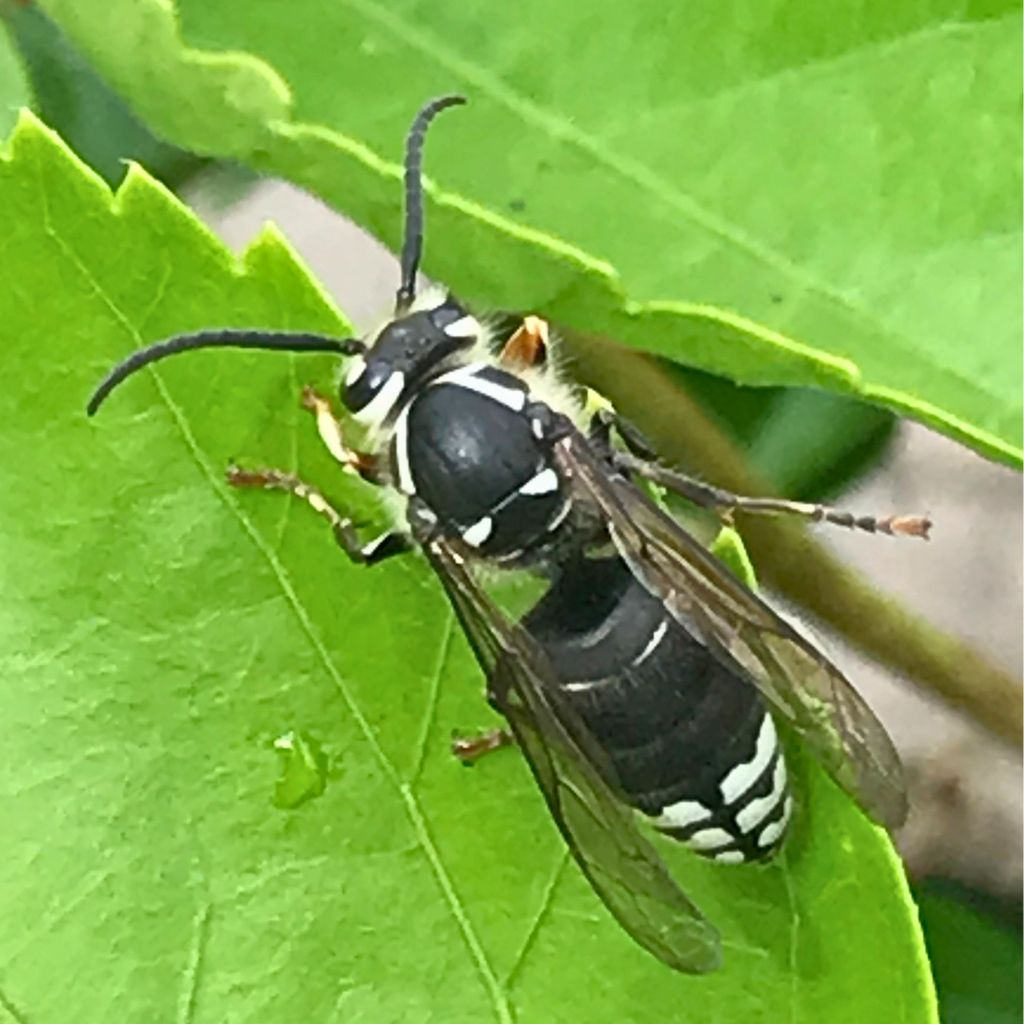
Bald-faced hornets are large, fast-moving wasps that are commonly found around homes in Virginia Beach, Yorktown, and Williamsburg. Despite the name, they’re actually a type of yellowjacket.
What Do Bald-Faced Hornets Look Like?
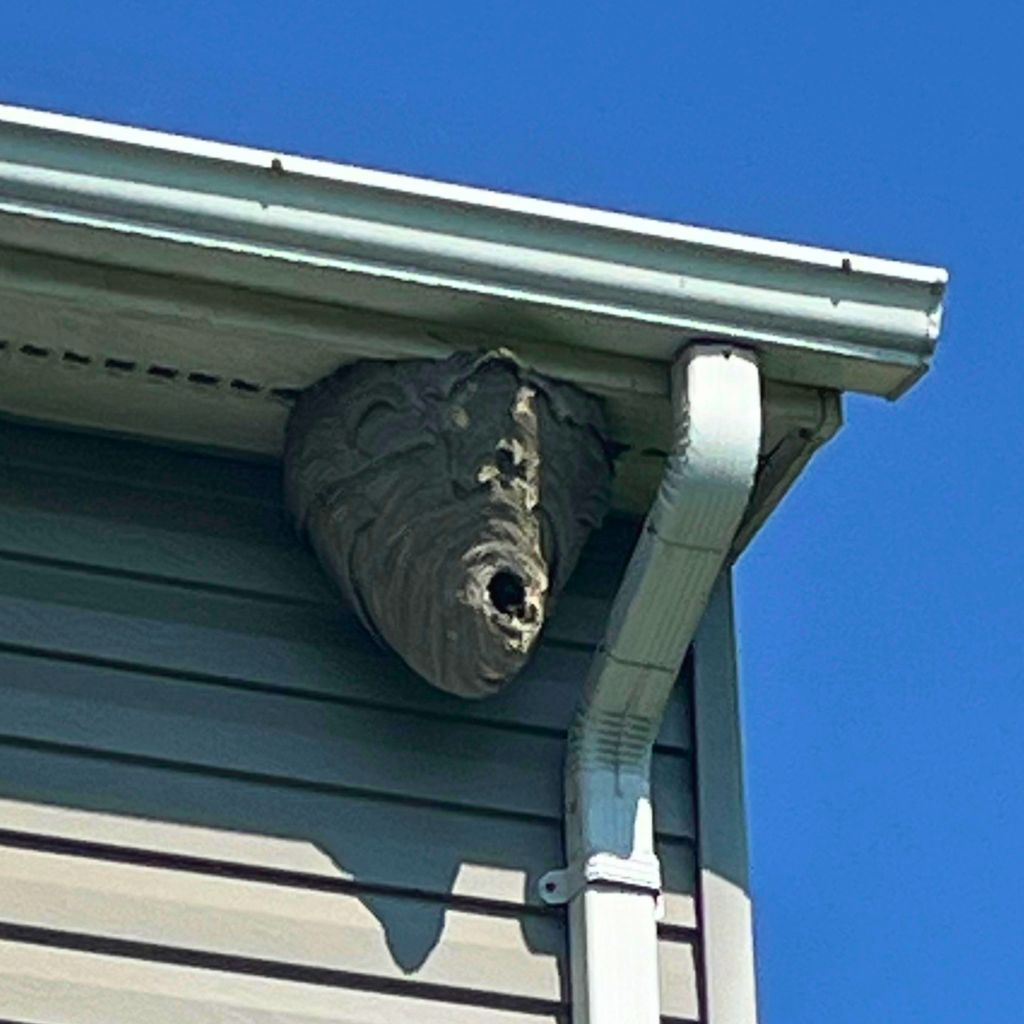
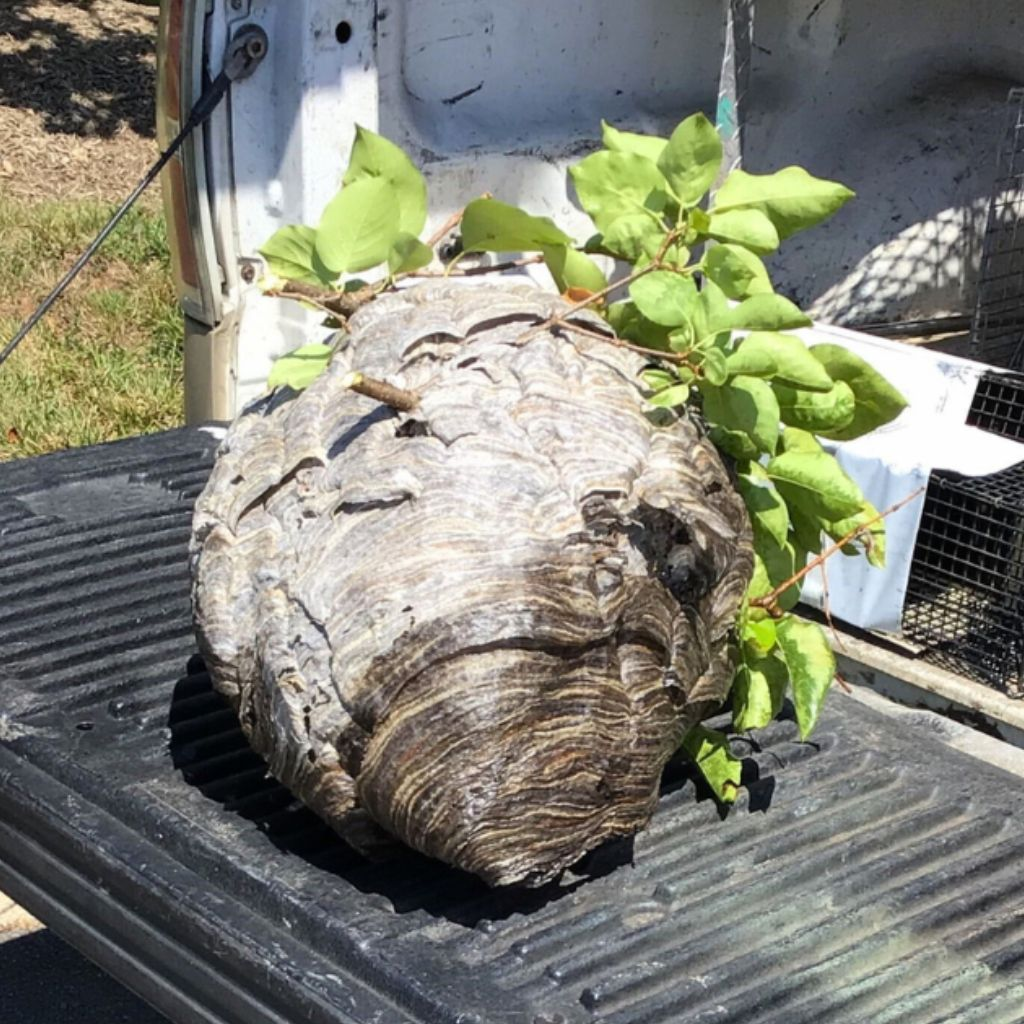
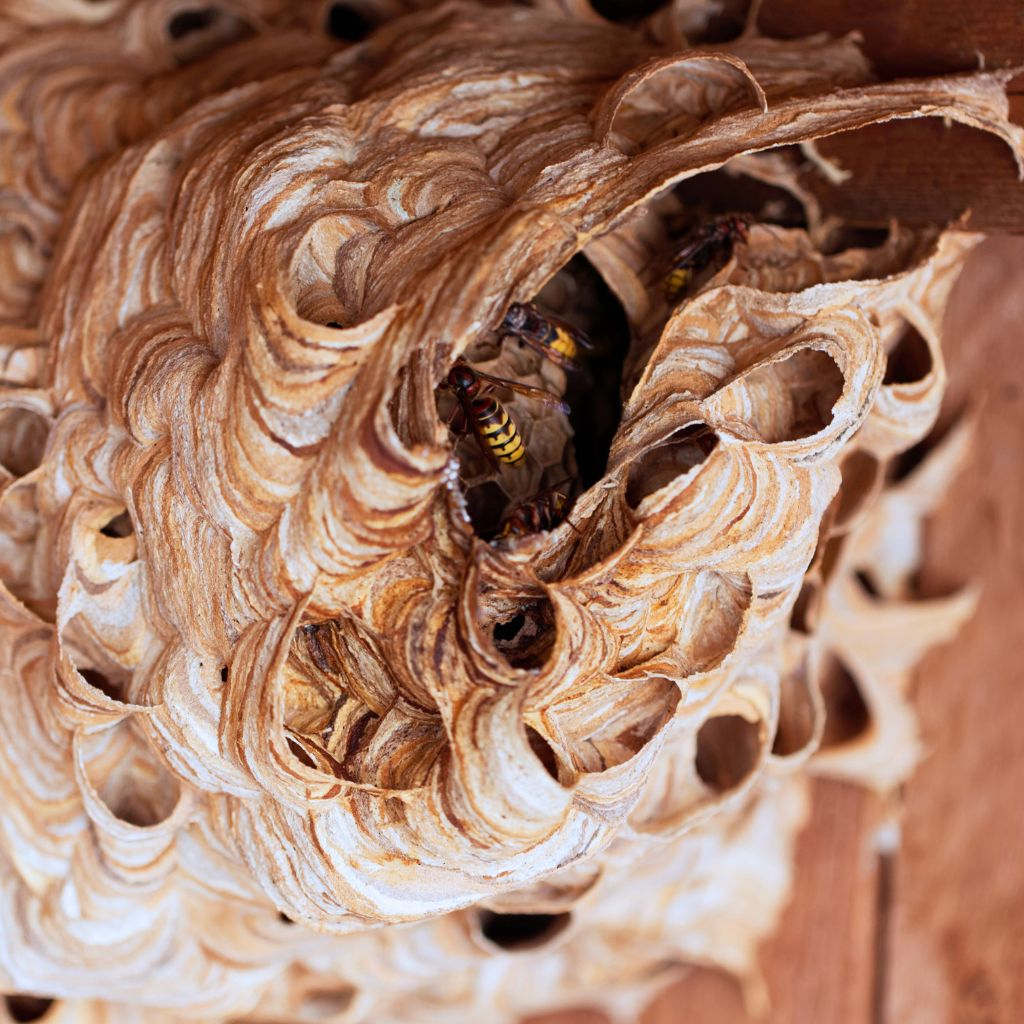
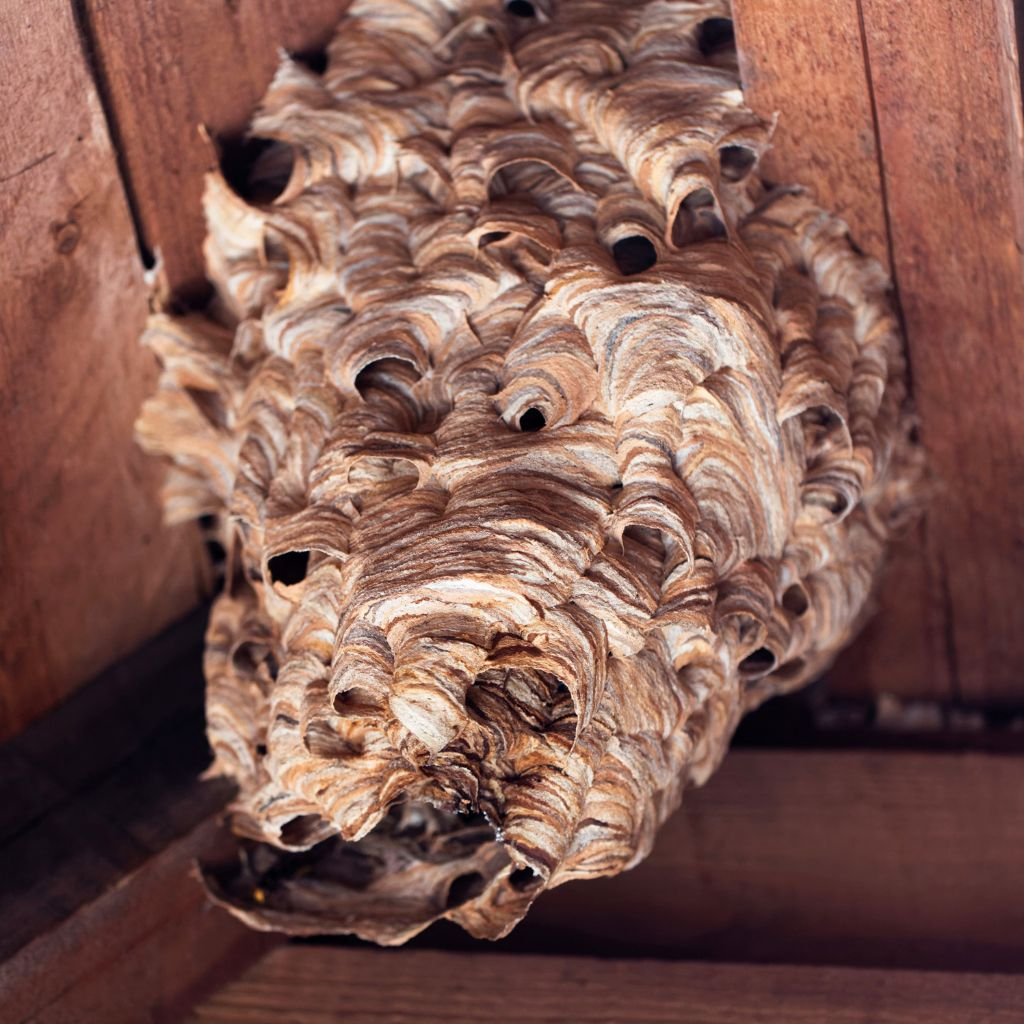
Bald-faced hornet nests are made of a gray, paper-like material and are fully enclosed, not open like paper wasp nests. The surface looks layered and slightly rough, almost like it’s made of dried paper pulp.
Most nests are round or football-shaped and can grow quite large, often the size of a basketball or bigger by late summer.
You’ll usually find them:
- Hanging from tree branches
- Attached to bushes or shrubs
- On the side of a home, under eaves, or near rooflines
There is usually a single entrance hole, and you’ll see hornets flying in and out of it throughout the day.
If you see a large, gray, enclosed nest hanging in a tree or attached to your home with steady wasp activity, it is most likely a bald-faced hornet nest.
What Does A Bald-Faced Hornet Nest Look Like?
Bald-faced hornet nests are made of a gray, paper-like material and are fully enclosed, not open like paper wasp nests. The surface looks layered and slightly rough, almost like it’s made of dried paper pulp.
Most nests are round or football-shaped and can grow quite large, often the size of a basketball or bigger by late summer.
You’ll usually find them:
- Hanging from tree branches
- Attached to bushes or shrubs
- On the side of a home, under eaves, or near rooflines
There is usually a single entrance hole, and you’ll see hornets flying in and out of it throughout the day.
If you see a large, gray, enclosed nest hanging in a tree or attached to your home with steady wasp activity, it is most likely a bald-faced hornet nest.
Are Bald-Faced Hornets Dangerous?
Yes. Bald-faced hornets are very defensive and quick to sting if you get close to their nest.They guard a clear area around the nest. The risk of getting stung increases when you get within about 10 to 15 feet of it.
Bald-faced hornets do swarm when defending the nest. It is common for multiple hornets to come out at once and chase a threat.
Like other wasps, they release a chemical signal when they sting, which causes more hornets to join in. This is why attacks can escalate quickly.
Their stings are painful and can happen multiple times in a short period. Most people experience sharp pain, swelling, and redness, but multiple stings increase the risk, especially for children, pets, or anyone allergic.
If a nest is active and within range of where people walk or work, it should be treated as a high-risk situation.
European Hornets in Virginia Beach
European hornets are the largest wasps most homeowners will see in Virginia Beach, Yorktown, and Williamsburg. They often surprise people because of their size and loud flight. They’re less aggressive than yellowjackets, but they can still be a problem when they nest in or around your home.
What Do European Hornets Look Like?
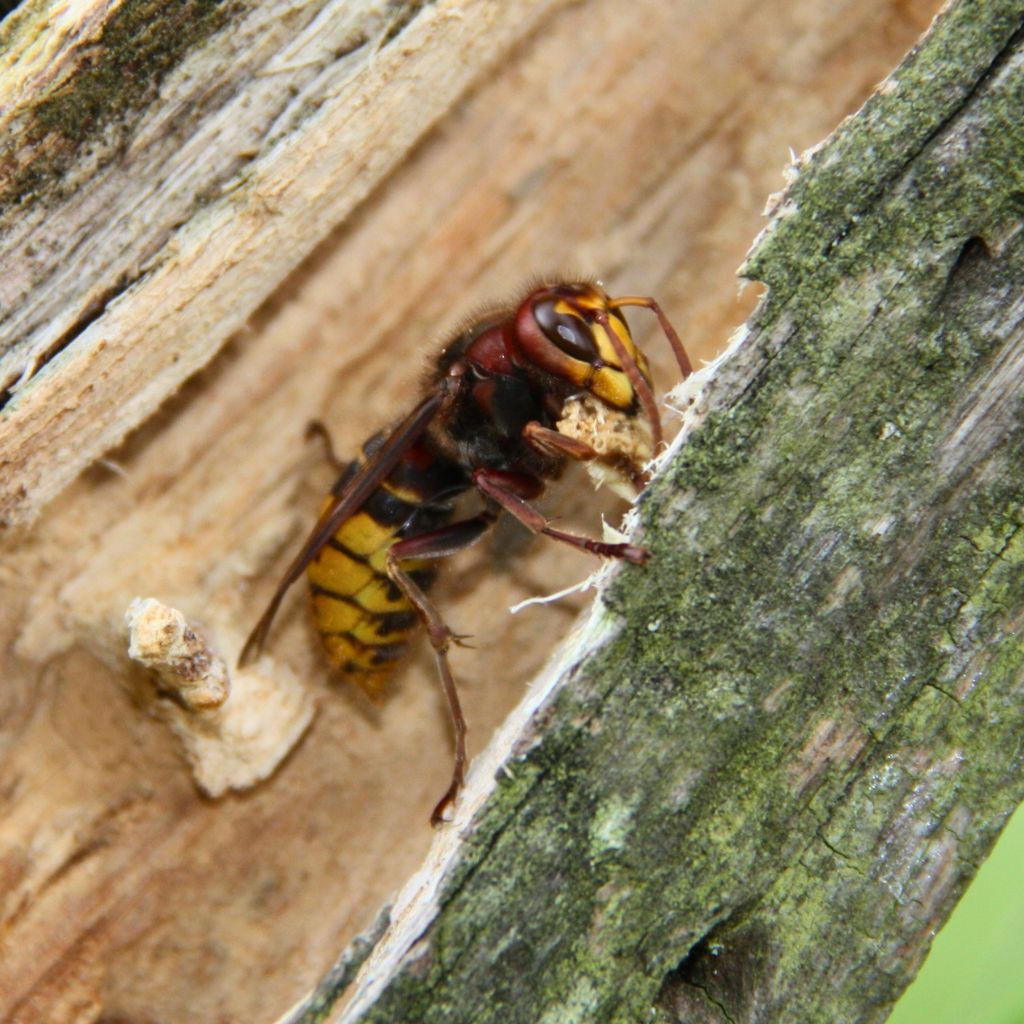
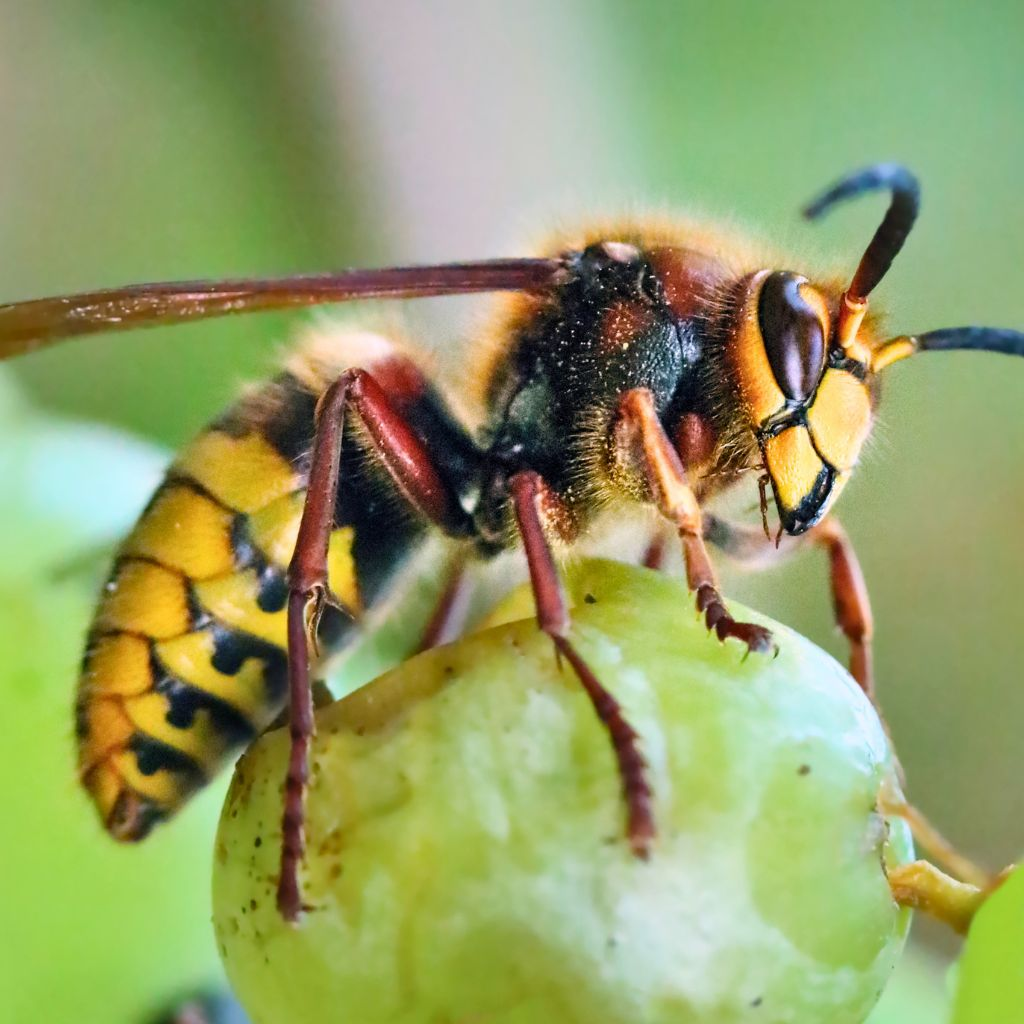
European hornets are large and easy to notice. They have a reddish-brown head and upper body, with a yellow abdomen that has black stripes. Their coloring is more muted and darker than yellowjackets, not bright neon yellow.
Their size is one of the biggest clues. They’re thick-bodied and heavy-looking, not slim like paper wasps.
Another key difference is their behavior:
- They are often active at dusk and even at night
- You may see them flying around lights or windows after dark
- Their flight is loud and steady, not quick and darting
If you’re seeing large, reddish-brown and yellow wasps, especially later in the day or at night, you’re likely dealing with European hornets.
Common Nesting Areas (Attics, Trees, Wall Voids)
European hornets usually build their nests in enclosed, protected spaces.
Common nesting areas include attics, wall voids, hollow trees, and sheds. They prefer areas that are dark, quiet, and out of the weather. Inside homes, they often enter through gaps near the roofline, soffits, or vents.
Their nests are made of a brown, paper-like material and are fully enclosed. Most of the time, you won’t see the nest itself. You’ll notice hornets flying in and out of the same opening.
Another sign of European hornets is where they feed. They’re often drawn to fallen fruit, tree sap, and other sugary food sources. If you have fruit trees on your property, you may see increased activity especially in late summer.
Are European Hornets Dangerous?
European hornets will sting if you get close to their nest, but they’re not as aggressive as yellowjackets. They defend the area around their nest, especially if it’s inside a wall, attic, or tree. If you get too close, they may fly at you and sting.
They can sting multiple times. They don’t swarm as aggressively as yellowjackets, but several hornets can come out at once if the nest is disturbed.
One key difference is that they’re active at night. They’re often drawn to lights, which is why people notice them around windows or outdoor lighting after dark.
Their stings are painful and usually cause:
- Immediate pain
- Swelling and redness
- Itching
The risk is higher when the nest is inside your home or near an entry point, because you’re more likely to cross their path without realizing it.
When to Call A Professional for Wasp Removal
Not every wasp needs to be removed right away. But in many cases, it’s safer to call a professional.
You should consider wasp removal if:
- The nest is close to a doorway, deck, or walkway
- You’re seeing a lot of activity in one area
- The nest is inside your home, wall, or attic
- The wasps are acting aggressive (flying at you or chasing)
Yellowjackets and bald-faced hornets are the biggest concern because they can attack in groups and sting multiple times.
Trying to remove a nest on your own can be risky, especially if:
- You can’t see the full nest
- It’s in the ground or inside a structure
- The colony is already large
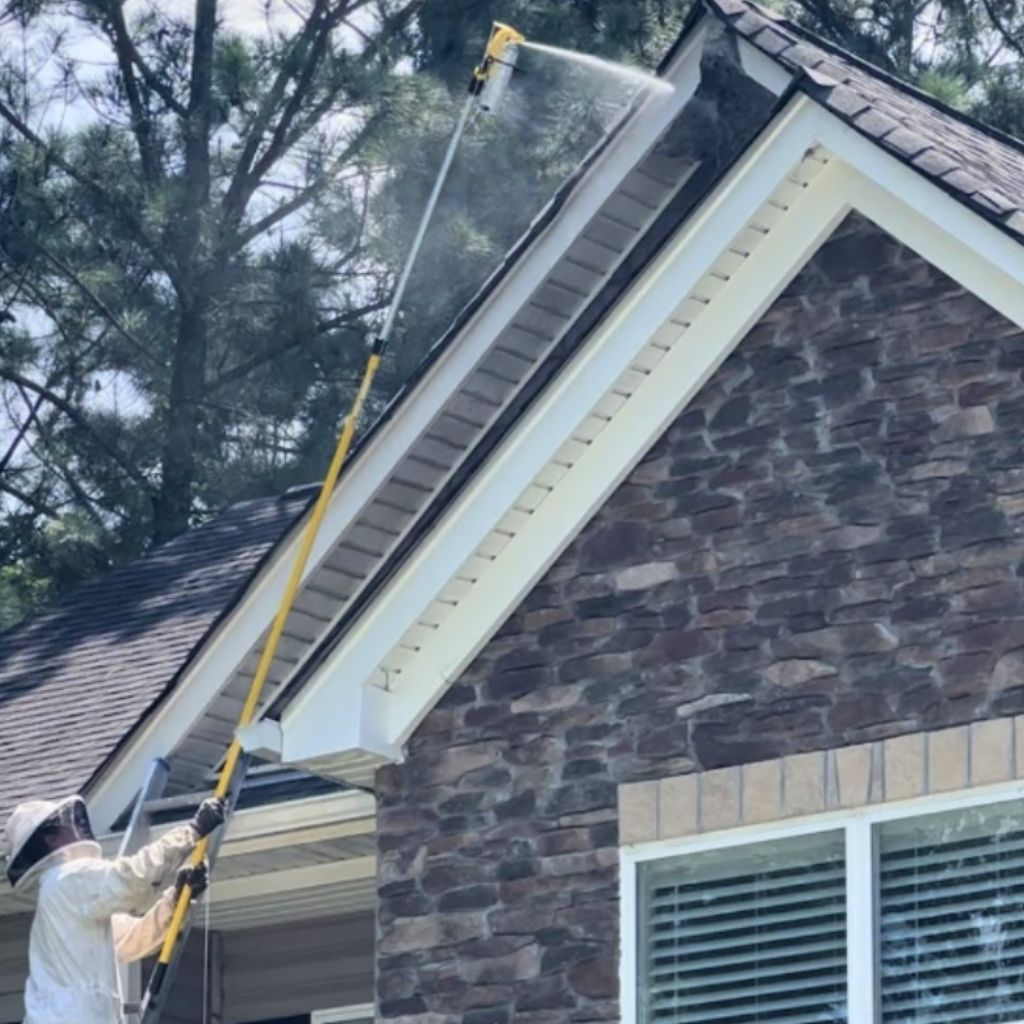
Professional wasp control ensures the nest is properly treated and fully removed, without putting you at risk.
If you’re in Virginia Beach, Yorktown, or Williamsburg and not sure what kind of wasp you’re dealing with, it’s best to have it identified and handled safely.
Wasp Removal in Virginia Beach, Yorktown, and Williamsburg
At Summit Pest Control, we provide professional wasp removal and wasp control services for homeowners in Virginia Beach, Yorktown, and Williamsburg. We deal with all of the common species in this area, including paper wasps, yellowjackets, bald-faced hornets, and European hornets.
Here’s what we focus on:
- Correct identification so the right treatment is used
- Safe wasp nest removal, even in hard-to-reach or hidden areas
- Targeted treatment to eliminate the colony
- Prevention to help reduce future nesting
Wasp nests can be hidden in walls, underground, or high up on your home. Trying to handle them on your own can lead to multiple stings, especially with aggressive species like yellowjackets and bald-faced hornets.
Our team knows where to look, how to treat each type of wasp, and how to remove nests without putting you or your family at risk.
If you’re dealing with wasps around your home, contact us for fast, reliable wasp removal in Virginia Beach, Yorktown, and Williamsburg.